Rhodiola Rosea Benefits for Stress, Energy & Focus
Last updated: May 28, 2026
There’s a particular kind of tiredness that caffeine doesn’t fix. You know the one: where you’ve already had two coffees, and you’re still staring at your screen at 2 pm, wondering where your brain went. Or where you wake up from eight hours of sleep feeling like you didn’t sleep at all. That’s not a caffeine problem. That’s a stress response problem, and it’s one that a growing number of people are trying to solve with adaptogens rather than stimulants.
Rhodiola rosea keeps coming up in those conversations. It has a longer research history than most herbs in the wellness space and a track record that dates back centuries, long before clinical trials confirmed what people already knew.
What Is Golden Root and Why Is Rhodiola So Popular?
What golden root is one of the first questions people ask when they start looking into this herb - it’s simply another name for rhodiola rosea, used historically across Scandinavia, Russia, and parts of Asia. The plant grows at high altitudes in cold, harsh climates, and the working theory is that the same compounds it develops to survive those conditions are what make it useful to us. It’s a compelling idea, and science has been gradually catching up.
At a functional level, rhodiola works as an adaptogen - it supports your body’s ability to handle stress rather than just blunting your perception of it or overriding your system with a stimulant effect. When you’re under sustained pressure, cortisol stays elevated, your nervous system stays activated, and the downstream effects touch everything from your mood and focus to your sleep quality and immune function. What rhodiola does, according to the research, is help moderate that stress response - keeping the spikes and crashes less extreme and helping the body return to baseline more efficiently. It doesn’t sedate you or wire you. That middle ground is exactly why it’s become popular with people who’ve gotten tired of the coffee-crash cycle or who find that anxiety is the unwanted side effect of every other energy solution they’ve tried.
The surge in interest isn’t just wellness-world hype, either. Researchers have been publishing studies on this plant for decades, particularly in Russia and Scandinavia, where it’s been used medicinally for generations, and the findings on stress, fatigue, and cognitive performance are consistent enough to take seriously.
Proven Rhodiola Benefits for Stress and Energy
The most well-documented rhodiola health benefits fall into a few clear categories, and it’s worth being specific about them because “reduces stress” is a phrase that gets applied to about 50 different supplements with wildly different levels of evidence.
On the stress side, clinical studies have shown that rhodiola reduces self-reported stress and burnout, and not just subjectively; there’s measurable data on cortisol and stress biomarkers. People under chronic work stress who took standardized rhodiola extract reported feeling less overwhelmed, less fatigued, and more emotionally stable. Importantly, these effects showed up relatively quickly, within a few weeks, which is faster than many adaptogens. If you’re curious about what chronic stress is doing to your cortisol specifically, we broke it down here, focusing on what actually moves the needle.
On the energy and focus side, the rhodiola health benefits that show up consistently in the research involve mental fatigue specifically - not just physical tiredness, but the cognitive kind that makes concentration difficult and decision-making feel exhausting. The active compounds in the root, particularly rosavins and salidroside, appear to influence serotonin and dopamine activity in the brain, which partly explains the mood support and the improved ability to sustain attention over long periods. This isn’t the same mechanism as caffeine, which is why the effect feels different - cleaner, without the jitteriness, and without the hard drop-off afterward.
The golden root benefits also extend to antioxidant activity, meaning the plant has protective effects at a cellular level beyond just the stress response. That’s useful context if you’re thinking about why certain adaptogens show up repeatedly in formulas aimed at longevity and cognitive aging; it’s not just about feeling better today.
Rhodiola Rosea Benefits for Men
The rhodiola rosea benefits for men that tend to get the most attention are the physical performance benefits, and the mechanisms behind them are worth understanding. Under intense physical or psychological stress, cortisol rises, and sustained high cortisol levels are antagonistic to testosterone, affecting muscle recovery, energy, and overall physical resilience. Rhodiola’s cortisol-moderating effects create a more favorable hormonal environment, which is why it’s become popular among athletes and people in physically demanding jobs.
Studies on endurance specifically show reduced perceived exertion and faster recovery times, which, in practical terms, mean you can train harder, feel less wrecked afterward, and bounce back sooner. But the cognitive side deserves equal attention, especially for men in high-pressure professional environments. Mental burnout is real, and it affects performance in ways that are easy to attribute to other causes - poor focus, shorter temper, difficulty thinking clearly under pressure. Rhodiola addresses exactly that pattern, which is why it works as well in a boardroom as in a training context. Pair it with the other cortisol-lowering strategies covered in this piece, and the effect compounds.
Rhodiola Rosea Benefits for Female Wellness
The conversation around rhodiola rosea benefits for female health has expanded significantly recently, particularly regarding hormonal fluctuations and mood stability. Women dealing with PMS, perimenopause, or the general hormonal variability that comes with being a woman in a high-demand life often find that their stress tolerance shifts dramatically at different points in the month and its biology. Rhodiola supports the endocrine system and helps stabilize brain chemistry, which translates to fewer severe mood swings, less irritability around hormonally sensitive periods, and a more consistent baseline to work from.
The energy piece is equally relevant. A lot of women dealing with fatigue have already cut back on caffeine because of how it affects their anxiety or sleep, and they’re looking for something that provides sustained, clean mental energy without those downsides. That’s exactly what rhodiola does well. The golden root benefits in this context are less dramatic than caffeine (you don’t feel a hit), but over the course of a day, the difference in how you feel by 4 pm is noticeable.

How to Choose the Best Rhodiola Supplement
This is where a lot of people go wrong, and it’s worth being direct about it. The rhodiola supplement market is crowded, and quality varies significantly. The two things that matter most are standardizing the extract and the dose. You want a product that specifies its rosavins and salidroside content - ideally standardized to 3% rosavins and 1% salidroside, which is the profile used in most of the clinical research. If a product just says “rhodiola rosea extract” without specifying those compounds, that’s not a reliable indicator of potency.
The dose question matters just as much. Effective doses in studies typically range from 200 to 600mg per day, and many products on the market fall well below that while still prominently listing rhodiola on the label. Proprietary blends are particularly common as a way of obscuring this - everything sounds impressive, nothing is verifiable. A clean label that lists every ingredient and its exact amount is non-negotiable if you actually want to know what you’re taking.
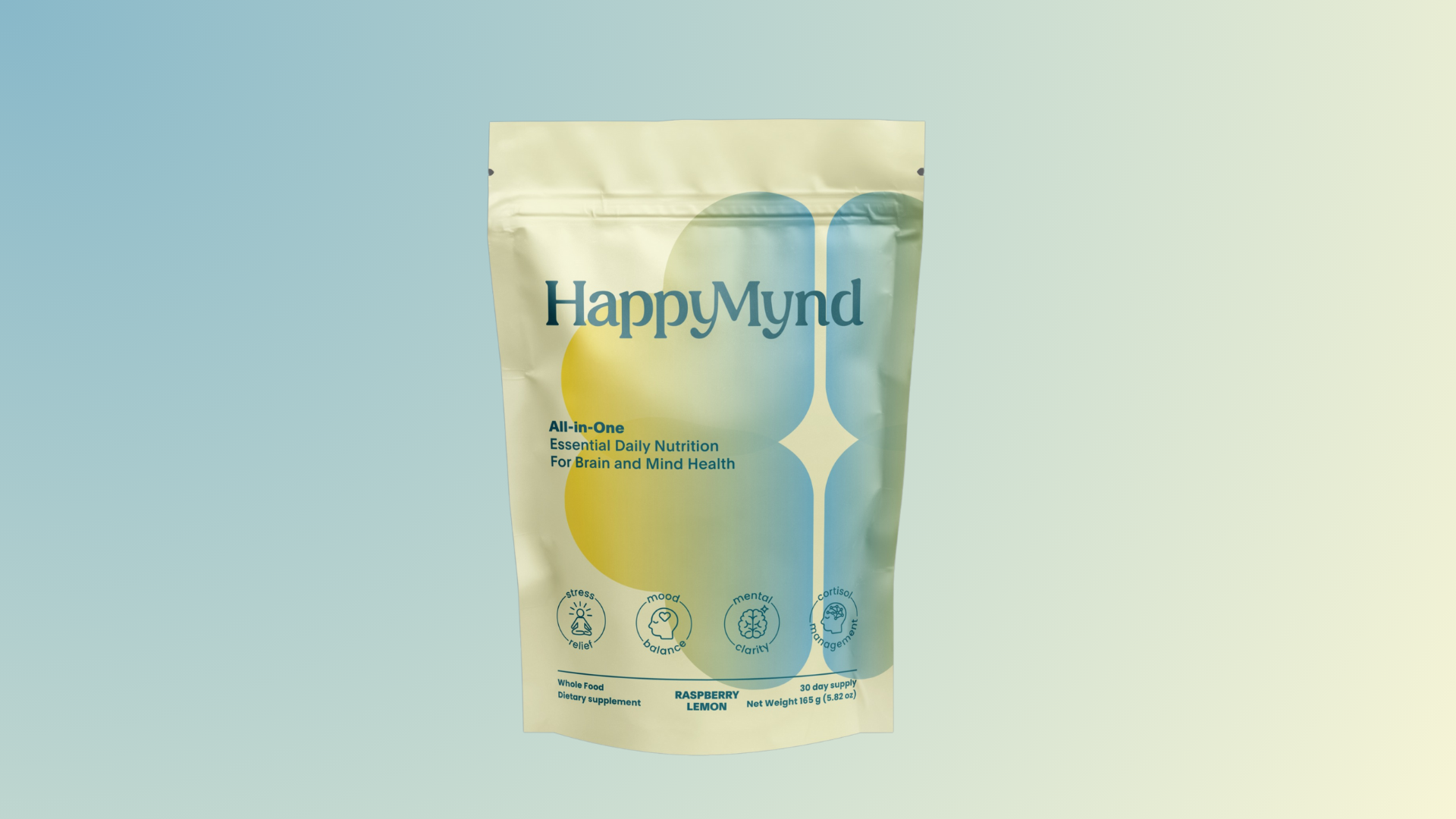
At HappyMynd, we use rhodiola rosea at a clinically relevant dose as part of a broader formula that combines it with ashwagandha KSM-66®, L-theanine, magnesium glycinate, 5-HTP, saffron, and bacopa monnieri. The thinking behind that combination is that these ingredients work on overlapping but distinct pathways - rhodiola addresses fatigue and mental performance, ashwagandha targets cortisol directly, L-theanine smooths nervous system activation, and so on. Together, they do more than any single ingredient could.
Rhodiola benefits are real and well-documented, but they’re also not magic. The herb works best as part of a broader approach - consistent sleep, stable blood sugar, actual stress management practices, and targeted supplementation that fills the gaps your lifestyle can’t fully cover. Our essential nutrients guide is a useful companion read if you want to understand what else belongs in that picture.
Your brain is your superpower
Now you can take better care of it.