Best Supplements for High Cortisol: What Actually Has Evidence (2026 Guide)
Last updated: August 3, 2026
If you’ve spent any time on TikTok lately, you’ve probably seen someone drinking a “cortisol cocktail” or promising the secret to instant calm. It’s everywhere, and honestly, most of it is noise. Somewhere between the wellness influencers and the actual research, a real answer got buried: a handful of ingredients genuinely have decent human evidence behind them, and the rest is just packaging.
So let’s cut through it. The short version: the best supplements for high cortisol, meaning the ones with actual studies behind them and not just a nice label, are Ashwagandha, L-Theanine, Magnesium, and Rhodiola Rosea. If you’ve ever typed what supplements lower cortisol into a search bar at midnight hoping for a straight answer, that’s basically it. Everything else you’ll see on a shelf is either underproven or straight-up made up. We’re not here to sell you a bottle. The goal is that you finish this and can read a label yourself, without needing us or anyone else to translate it for you.
What High Cortisol Actually Means
First, a quick reset, because a lot of the fear around cortisol is misplaced. Cortisol isn’t the villain here. It’s the hormone that gets you out of bed and gives you the push to get through your day, and normally it rises early and drops by night so you can actually wind down. Where things go sideways is when it stays up. Stays up all afternoon, all evening, refuses to drop even when you’re lying in bed at 2 a.m. staring at the ceiling with a brain that won’t shut off. Wired and exhausted at once. That’s the pattern people are usually describing when they say their cortisol feels “high.”
Before anyone starts hunting for what lowers cortisol in a bottle, it’s worth looking at the basics first: sleep, food, movement. Those three things move the needle more than anything you can swallow. Supplements are a support system, not a fix. They work alongside the boring stuff, not instead of it.
Do Cortisol Blockers Work?
Here’s where a lot of marketing gets dishonest. You’ll see products branding themselves as a cortisol blocker, like there’s some kind of off switch you can flip. But that term doesn’t come from science; it comes from a copywriter who needed something snappier than “adaptogen.” No powder shuts down your stress hormones completely, and frankly, you wouldn’t want that even if it were possible.
What genuinely useful ingredients do is quieter than that. They support a normal stress response and help your nervous system come back down after it’s been switched on, instead of trying to jam the switch itself. So the bar we used for this piece is simple: an ingredient made the list only if human trials backed it up, at an amount that matched what was actually tested.
Ashwagandha: The Strongest Evidence
If there’s one ingredient that comes up again and again in the research, it’s ashwagandha. Out of everything people search for supplements to lower cortisol, this one has the most consistent human data behind it, and it’s usually the first name on any honest list of the best supplements for high cortisol. Multiple trials have found it reduces perceived stress and measurably lowers cortisol compared to a placebo. Unlike a lot of this space, the results actually tend to hold up study after study.
The details matter here, though. Most of the research uses a specific root extract, and KSM-66 is the version studied the most. People generally start noticing something after two to three months of consistent use, not overnight. And it’s not for everyone: pregnant women should skip it, and if thyroid, immune, or liver issues are already part of your picture, that’s worth running by your doctor before you add anything new.
Rhodiola Rosea: Best for Stress Fatigue
Rhodiola plays a slightly different role than ashwagandha, and it’s easy to mix the two up if you’re just skimming labels. Rhodiola’s research is more focused on mental fatigue, that specific flavor of burnout where you’re tired but can’t relax, foggy but wired. It’s less about raw hormone numbers on a lab report and more about how depleted you actually feel.
It’s one of the more interesting entries on the list of what supplements that lower cortisol because the evidence, while solid, is thinner than what exists for ashwagandha. Worth knowing before you build expectations around it. Some people even call it the closest thing to a natural cortisol reducer for that specific tired-but-wired state, since it targets the fatigue side of stress rather than just the hormone number. One practical note: rhodiola can feel a little energizing for some people, so it tends to work better earlier in the day than right before bed. Dragging by 3 p.m. but can’t switch your brain off at night? This is the one worth reading more about.
Magnesium: The Foundational Mineral
Magnesium doesn’t get the same hype as the trendier adaptogens, but it probably deserves more attention than it gets. It plays a direct role in keeping your nervous system calm, and a lot of people are simply running low on it without realizing it. Modern diets aren’t great at delivering enough.
Not all magnesium is created equal, and this is where labels get sneaky.:
-
Magnesium glycinate absorbs well and is gentle on digestion, which is why it shows up in most decent formulas.
-
Magnesium oxide is a different story: cheap to manufacture, poorly absorbed, usually there to pad a label without spending much on it.
And to be clear, magnesium isn’t a lower-cortisol supplement that works by dinnertime. This one’s slow. Foundational, background work that matters more after a month than after a Tuesday. But as a natural cortisol reducer, quietly doing its job in the background over time, it’s genuinely hard to beat for the price.
L-Theanine: Calm Without Sedation
L-Theanine comes from green tea, and it’s genuinely one of the better-studied compounds for taking the edge off without knocking you out. That’s its whole appeal: a kind of clear, settled focus rather than drowsiness, which is why you’ll find it paired with caffeine in a lot of formulas to smooth out the jitters.
People take it in the morning to steady their focus, or in the evening to quiet a racing mind before bed. Where it falls short is the long game. Theanine is better at how you feel right now than at reshaping your hormone levels over months. For fast, short-term relief from that keyed-up feeling, it earns its spot. For a slow structural fix, it’s one piece, not the whole picture.
Holy Basil and Phosphatidylserine: Promising but Thinner Evidence
Holy basil (tulsi, if you’ve seen it under that name) has centuries of traditional use behind it, and the modern research, while smaller in scale, points in a genuinely promising direction for daily stress and mood. It just hasn’t been studied as extensively as ashwagandha, so “promising” is more honest than “proven.”
Phosphatidylserine is a different story. Its evidence mostly ties to blunting cortisol spikes after intense exercise, a narrow use case, and not a general answer for everyday work stress. Both are reasonable additions to a routine, but neither should be the main event.

What Does Not Hold Up: The Cortisol Detox Myth
Let’s address the elephant in the room: there’s no such thing as the best cortisol detox, full stop. Cortisol isn’t sitting in your bloodstream like some toxin waiting to be flushed out. Your body regulates it on its own, constantly, every single day. “Detox” language around cortisol is a marketing trick dressed up as biology, nothing more.
If you want to spot a bad product fast, here’s the tell: vague “proprietary blends” that hide exact amounts, studies that only happened in a petri dish or a mouse cage, or claims that promise an overnight fix. None of that holds up. The honest version of this category is small and specific. A short list of ingredients, tested in humans, at doses that match what was actually studied.
Cortisol and Belly Fat: What the Evidence Really Says
This is probably the single most searched angle in this whole topic, and it deserves a straight answer. People go looking for supplements to reduce cortisol and belly fat because chronic stress genuinely is linked to stubborn fat around the midsection. That part’s real. What’s not real is the idea that a supplement melts it off directly.
What the research actually shows is more indirect, and honestly more believable: these ingredients help people feel less stressed, sleep better, and have more bandwidth to make decent choices. Cooking instead of ordering in. Getting to the gym instead of skipping it. Over weeks and months, those small habit shifts are what actually move the number on the scale. The supplement’s job is to make that possible, not to do it for you.
How to Choose: Dose, Form, and Quality
If you take one thing away from all this, let it be a simple checklist. Look for a standardized extract, not just a vague plant name with nothing to back it up. Check that the amount on the label actually falls in the range that’s been studied, not a token sprinkle there for the marketing. Anything hiding behind “proprietary blend” usually means the brand doesn’t want you doing the math. Third-party testing is a decent sign someone’s actually standing behind their claims. And skip the fifteen exotic ingredients nobody’s heard of; that’s there to make the bottle look impressive, not to make the formula work better.
Once you filter for that, the field gets small fast. The best supplements for high cortisol aren’t the ones with the flashiest branding. They’re the ones boringly transparent about exactly what’s in them and why. If you’re trying to find the best cortisol supplement for your own routine, that transparency is honestly a better filter than any five-star review.
Where HappyMynd Fits Into This
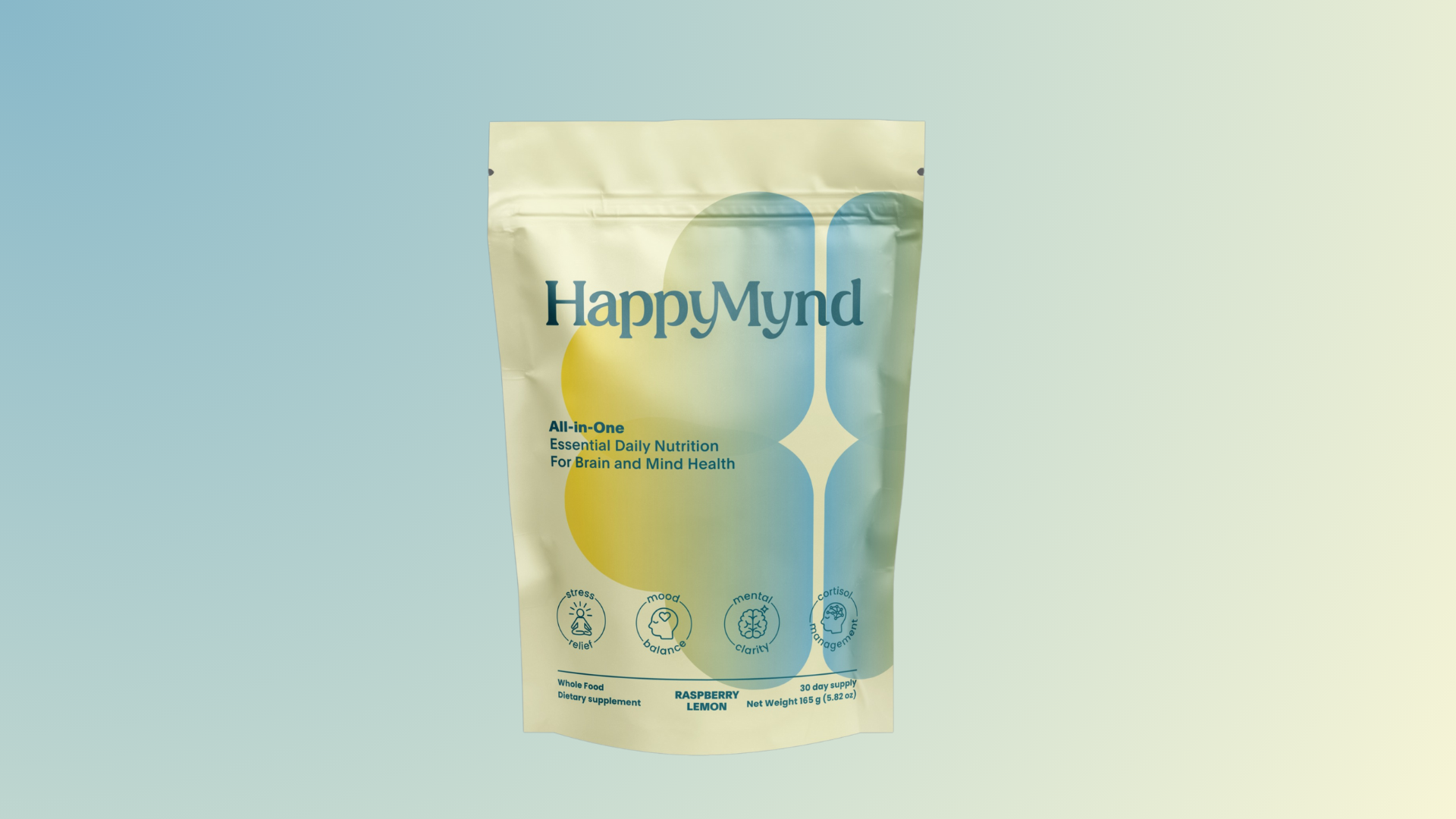
We built HappyMynd around exactly the ingredients this whole guide is about, nothing added just to fill out a label. Ashwagandha KSM-66, Rhodiola, Magnesium Glycinate, L-Theanine, and Holy Basil, all in one scoop, no caffeine, no crash. It mixes into water, juice, or a smoothie in the morning, and it’s got a light raspberry lemon taste with no added sugar, so it doesn’t feel like a chore.
The math is simple too: buying these ingredients separately as five different bottles runs well over $240 a month. One scoop of HappyMynd a month runs $65. Not sure it’s for you? That’s what the 30-day guarantee is for. Try it, and if it’s not doing anything, send it back. Subscribe and Save also gets you free shipping, no lock-in, and you can cancel whenever.
One last thing worth repeating: this article, and this product, aren’t trying to diagnose or treat anything. If something about your stress or sleep feels genuinely off, that’s a conversation for your doctor, not a supplement label. What we can offer is an honest formula built from ingredients that actually have research behind them, which in a category this loud is rarer than it should be.
Your brain is your superpower
Now you can take better care of it.